External growth is hard, which is why some senior living operators are growing via repositioning and renovation projects.
The average age of a senior living community in 2025 was 24 years, and operators are taking that as a cute to revitalize them. The Village of River Oaks, an Aspenwood Company community in Houston, is a good example of how operators are giving communities a facelift. The company recently completed renovations to refresh its independent living section of the community so it can live up to the standards of a luxury senior living community.
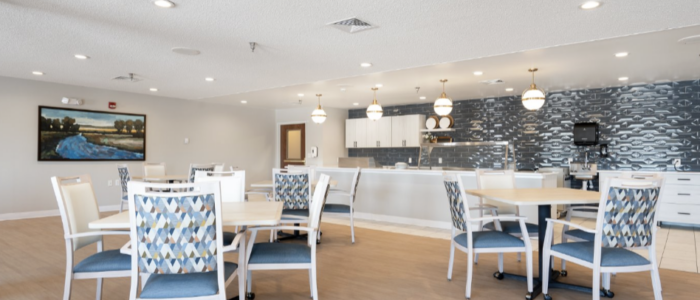
Workers also revamped the community’s cafe space, which now sees heavy use from residents wanting a more casual meal compared to its formal dining areas, according to Aspenwood President Heather Tussing.
Other operators like Denver, Colorado-based Onelife Senior Living have updated to communities to keep them fresh with an eye on.
Senior Housing News spoke with four operators to learn how and why they renovated communities for a new generation of older adults.
The Village of River Oaks, The Aspenwood Company
 The Village of River Oaks via The Aspenwood CompanyThe Village of River Oaks




This past year, Aspenwood renovated The Village of River Oaks in Houston over two phases to bring it up to standards as a luxury community. The work updated an underutilized bistro and transformed an assisted living dining room and lobby into something that would look home in amodern luxury hotel.
During the second phase of renovations, workers added a bar and resident engagement area to the assisted living portion of the community, Tussing said. Those designs weren’t typical when the community opened almost a decade ago.
“We always aim to lead the competition. This community opened in 2017, and staying ahead means we have to keep evolving,” Tussing told Senior Housing News.
The Village of River Oaks is an urban infill building, with around 200 units built on around one acre of land, which caused difficulties during the renovation process. The operator mitigated disruptions to the surrounding area by “being a good neighbor” to nearby businesses and staying in communication with them, Tussing said.
Since completing the renovations, residents have voiced appreciation for having more choices, particularly for the less formal dining room.
Leaders with the Houston-based operator routinely seeks to renovate the communities in the company’s portfolio, including on a shorter-term basis by adding new coats of paint or cleaning furniture. Tussing added that while these are important to help keep the community aesthetically pleasing for residents and prospects, much of the other renovation work goes on behind the scenes to smooth over operations, such as adding in full-building generators to its other Houston locations that restore power within seconds of an outage.
“I think that anytime an operator is arrogant enough to think they’ve got it, they’re going to become a dinosaur,” Tussing said.
Brookdale Orland Park, Brookdale Senior Living
- The Village of River Oaks via The Aspenwood CompanyBrookdale Orland Park before renovation.
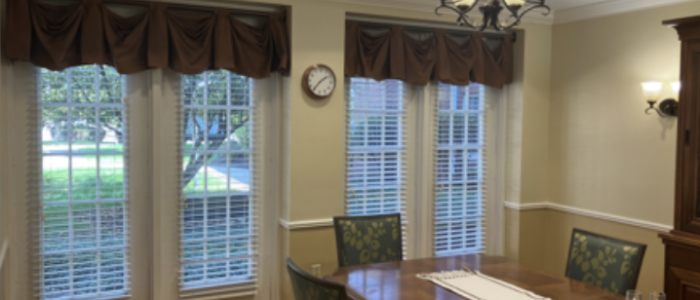
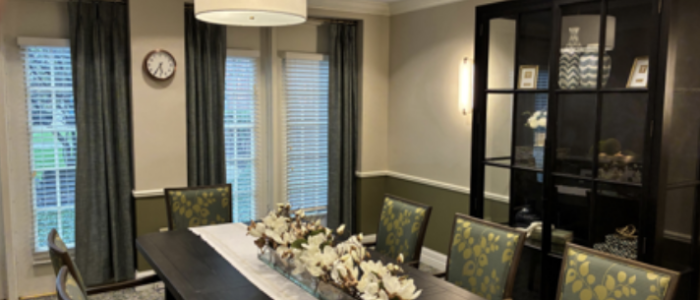
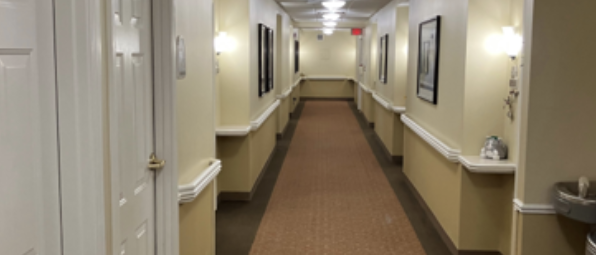
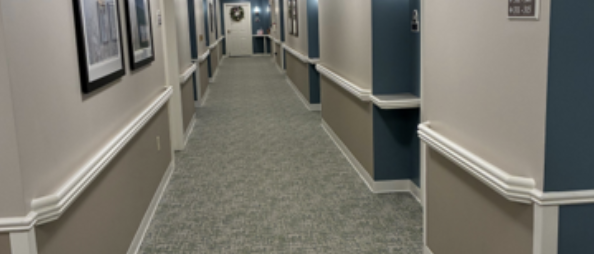
Among Brentwood, Tennessee-based Brookdale’s portfolio is Brookdale Orland Park a community in Orland Park, Illinois, which received a $950,000 renovation focused on the entry and lobby, living and dining areas, recreation spaces, corridors, restrooms and a multipurpose room, according to Steven Paquette, vice president of asset management. These included fresh paint and new furniture and updated carpeting through the community.
The focus areas were chosen through a “capital with purpose” lens based on how they greatest impact on resident experience, community operations, competitive positioning and long-term performance, Paquette said.
“We start with the market and the asset, not with finishes. We look at local demographics, demand, occupancy, competitive supply, pricing, building condition and prior investment to determine where targeted capital investment can have the greatest impact,” Paquette told SHN.
Brookdale’s owns more than three-fourths of the portfolio it operates and the company’s leaders’ approach to renovation comes from a need for continuous portfolio improvement, Paquette added.
“Our approach is opportunistic but disciplined. We invest when we believe the market supports it and the capital can strengthen the resident experience, improve competitive positioning and either generate an attractive return or protect the asset’s long-term value,” Clark Jones, senior vice president of strategic operations, said.
Following a community renovation, Jones said Brookdale closely tracks occupancy, pricing and return on investment to build out its greater renovation strategy and determine where it prioritizes future investments.
Reserve at Fountaingrove, Onelife Senior Living
- The Village of River Oaks via The Aspenwood CompanyReserve at Fountaingrove after renovations.
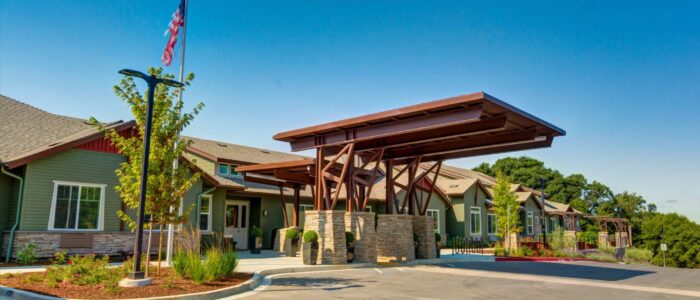



Onelife Senior Living acquired the Reserve at Fountaingrove in Santa Rosa, California around a year ago, and despite being between six and seven years old, the building hadn’t been well maintained, according to CEO Dan Williams. While the structure had a good foundation and despite showing well, it needed cosmetic touches to stand out in the area.
Between old carpet, plain painting, damaged baseboards and lighting with all differing lightbulbs, the building needed work. Alongside the interior work, Williams added effort was made to the courtyard and entrance landscaping.
“We focus on the arrival experience a lot, and in some buildings, arrival experience with a customer is not good,” Williams said.
Because the building itself is newer than most buildings on the market, Williams added the ROI was going to be quick from the outset due to the simplicity of the updates. Since its completion, not only has occupancy risen from around 35% to the 80% range, but the operator has increased rental rates in the process.
While the changes were minimal, working around the residents was the greatest challenge. Reserve at Fountain Grove is a standalone memory care community, with residents needing familiarity. To overcome this, Williams said there was constant communication with family members between meetings, emails and signage within the community.
“You want to sell it versus saying, ‘Hey, we’re going to move your mom because we’re going to change the floor,’” he said.
4-community assisted living portfolio, Vista Prairie Communities
- The Village of River Oaks via The Aspenwood CompanyPrairie Vista Communities before renovation.
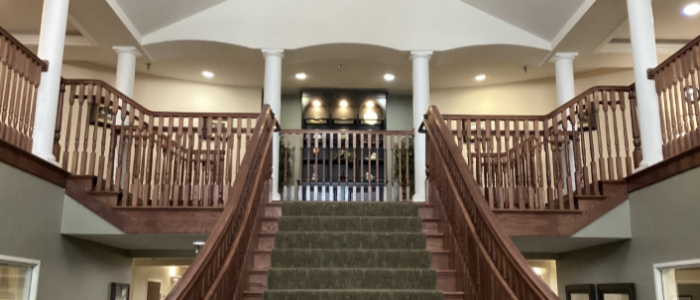
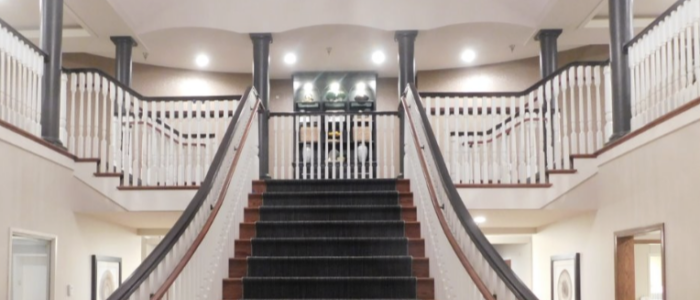
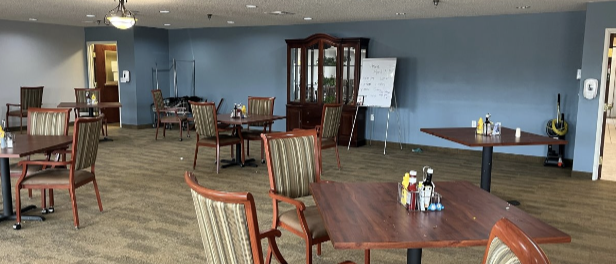
Over the past seven years, Champlin, Minnesota-based nonprofit Vista Prairie Communities has invested over $7 million in four assisted living and memory care communities. The operator set out with the work to improve resident safety and quality of life Anna Petersmeyer, executive vice president and chief operating officer.
The work to the four communities included improving wireless infrastructure that could accommodate AI-assisted wearables for residents. The operator also gutted and replaced meal service equipment and kitchens to offer menus that residents can order from any time of the day. The dining renovations and cosmetic updates and upgrades such as paint, carpet, lighting and landscaping, have helped improve resident satisfaction scores at the operator’s communities.
The greatest renovation challenges came from new building codes in Minnesota, which drastically slowed the process down by at least six months and the increased costs of materials. To offset delays, the nonprofit worked with state legislators and leaned on relationships it had built, but in some cases the projects simply took longer to complete than originally anticipated.
Across its 10 community-portfolio with 12 buildings, Petersmeyer said Vista Prairie has a goal of maintaining up to two renovations per year.
“Our strategies are to grow and to protect the core, which is basically reinvesting in our existing communities, and we do that as a bifurcated approach,” Petersmeyer said. “Our executive team is pretty small, but being nimble has really helped us make quick decisions and act fast, which puts us at an advantage.”
Companies featured in this article:
Brookdale Senior Living, Onelife Senior Living, The Aspenwood Company, Vista Prairie Communities