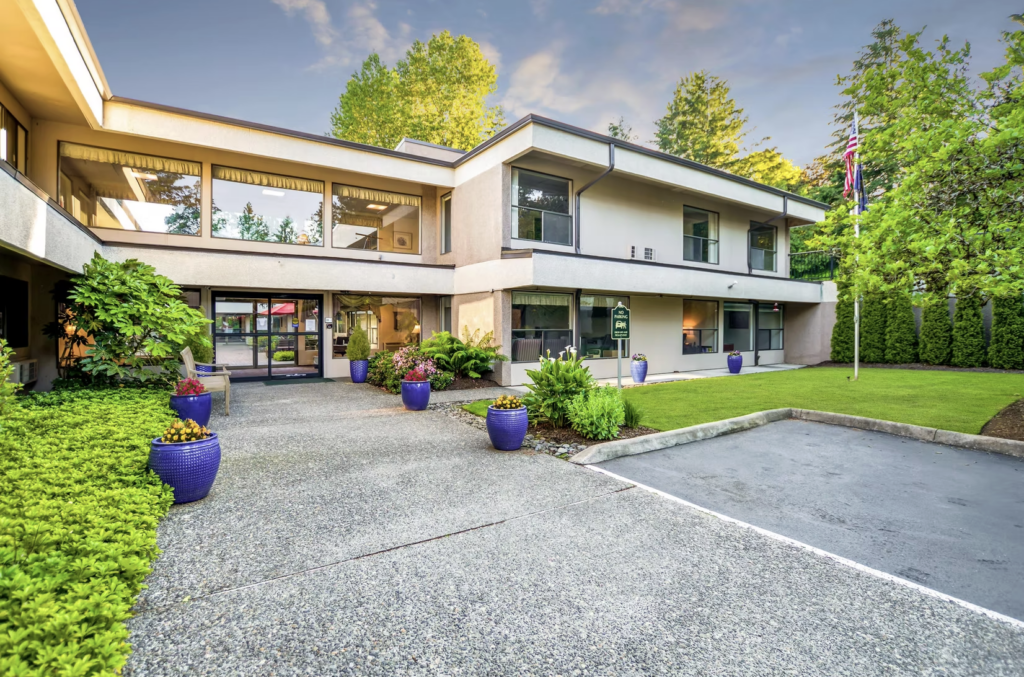
Smaller operators might have less total revenue than their larger peers, but that doesn’t mean they are at a disadvantage compared to them.
Many smaller operators see their communities as boutique in nature, and these companies’ small footprints, usually no more than a dozen communities, lets them keep it that way by staying closer to the ground, so to speak. Champlin, Minnesota-based nonprofit Vista Prairie Communities is one such operator with 12 communities and around 943 units across its portfolio.
With its size and a “small support office,” the organization is able to operate nimbly when making business decisions, according to Anna Petersmeyer, Vista Prairie’s executive vice president and COO.
Valparaiso, Indiana-based WestShore Senior Living, LLC has four communities comprising 337 units, and that size is both a strength and an occasional hindrance.
“If there’s a staffing issue or a key piece that’s not covered. How do you cover that with a small boutique management company?” WestShore Senior Living Managing Member Lori McLaughlin told Senior Housing News. “The answer is, you become very hands-on and you utilize the resources that you have, or you reach out to your key partners.”
Challenges at a smaller scale
Siloam Springs, Arkansas-based Roots Living is an operator with two communities. One of the biggest operational challenges Roots Living contends with is a lack of systems, policies and procedures in place that may be more firmly established for larger operators across the industry, according to CEO Warren Tonack.
“Being smaller, we have to prioritize our time and build those systems over time,” Tonack said.
Staffing challenges also present issues for smaller operators, particularly in the rural markets where Vista Prairie operates across Minnesota, Wisconsin and Iowa. To deal with this, the operator has developed its own “flex team” of direct caregivers and registered nurses that are able to fill in empty positions across the portfolio. When leadership positions need to be filled, Vista Prairie relies on its regional leadership to step up and fill those positions, according to Petersmeyer.
The operator’s leaders have developed an internal leadership development program over the past three years to help address gaps in executive leadership and registered nurses.
Westshore’s executive leadership is able to step in when staffing gaps make an appearance as well while applying lessons learned from larger operators, according to McLaughlin.
“We’re involved. We have daily communications with our communities. We interact with them frequently,” McLaughlin said. “Do we know every nuance? No, but we know enough to be able to properly guide and strategically develop that local on-site team.”
Growing from a small size presents its own challenges as well, particularly when it comes to accessing capital. Vista Prairie has focused on steady growth by looking to add one community per year through acquisition, where others such as Roots focus on maintaining what it already has to be a stronger offering for the surrounding area or Westshore has a vision of developing from the ground up to help meet demand.
Turning challenges into opportunities
While smaller operators have a number of challenges to overcome, some opt to reframe them as advantages instead.
For Tonack, having two communities and a small executive team means the company can make faster decisions and try out new playbooks rather than being beholden to a specific pattern of doing things, he said. It also allows for a tailored approach for delivering services to residents and how CapEx is distributed for renovation projects.
“It gives us a little bit of flexibility to operate really tailored to our specific communities, our specific people, our specific residents and that maybe some of the bigger players lose over time,” Tonack said.
Nimbleness is a common theme that runs through smaller operators as a strength. Alongside seeking out and being able to make deals quickly for acquisitions, if it fits the general community profile, Petersmyer said the same concept applies to financing and conducting renovations on its existing properties. Over the past six years, the operator has invested around $7 million in renovations and updates for its existing communities and recently opened a $48 million community it built from the ground up.
“Even though we’re considered a smaller organization, the activities are pretty high compared to our five-person executive team,” Petersmyer said. “There’s a lot going on, and what we rely on is the discipline that we’re leveraging all the resources that we do have available to us to its fullest extent.”
Westshore’s McLaughlin said the company’s executive directors appreciate the leadership team’s ability to make quick decisions rather than having to wait for a long approval process. In one instance, Westshore was able to pull together its leadership team to devise a resource guide for its memory care residents and their families after finding a need for it. After meeting together, a draft was ready within two weeks.
It has also helped staff out as well, such as being able to identify challenges that had arisen with the company’s health insurance policies, and the necessary changes were completed within two months to better satisfy workers.
“They don’t have to wait for someone in a corporate office 10 states away that’s going to have to work that through three other layers themselves before they can get back to them, and it might be six months before they get a decision on that,” McLaughlin said. “I came from a corporate environment, so I fully understand how frustrating that can be … but also understanding from a corporate standpoint, you’ve got to dot those I’s and cross those T’s.”
Companies featured in this article:
Roots Living, Vista Prairies Communities, WestShore Senior Living