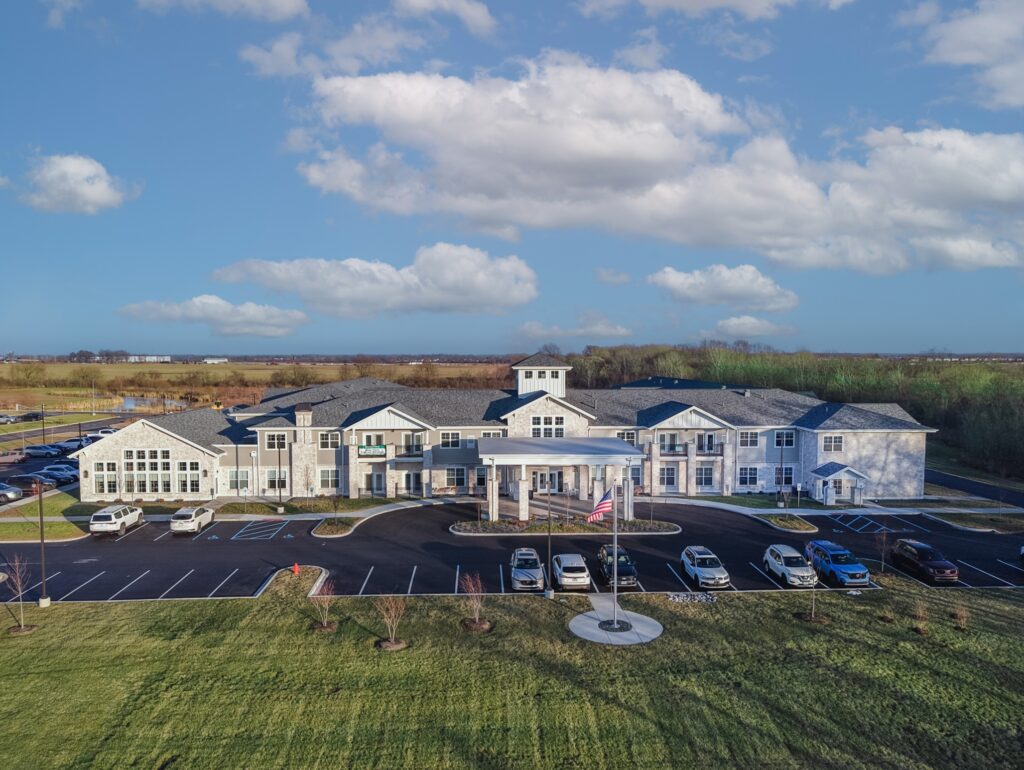
Priority Life Care is growing its memory care program to focus its model on a research-based method in an effort to gain more emotional understanding and empathy in dementia care.
Today, Fort Wayne, Indiana-based Priority Life Care oversees a memory care portfolio that includes 28 full-continuum communities with memory care segments and four standalone memory care properties. To meet the demands of memory care operations in 2026, the company adopted and implemented the Validation Method, developed by gerontologist Naomi Feil.
The Validation Method teaches caregivers and community leaders to understand the emotions behind the words and actions of a person living with dementia. Rather than correcting or redirecting older adults living with dementia or cognitive change, the new method teaches caregivers to understand the emotions of someone living with dementia, which can create better communication, reduce stress and preserve dignity, according to Corporate Director of Memory Care Craig Rukande.
The internationally recognized method is now a “cornerstone” in Priority Life Care’s effort to offer person-centered dementia care to older adults today. The company’s Along the Journey memory care program is built upon understanding an individual’s lived experiences and stories to “meet them where they are,” Rukande said.
Rukande has worked as a certified Validation Method instructor since 2019, and the latest effort to expand training and new programming in memory care aligns with the company’s goal of growing its programming, training and expertise in dementia care.
“This is how we’re looking at new growth. With any opportunity we have, we want to grow our memory care because it will help us standardize and improve our method of person-centered dementia care,” Rukande said. “Each person is unique, and we must understand the individual.”
The memory care sector was in the past focused on providing quality care, whereas today, care is still critical, but so too are lifestyle and finding ways to reach older adults living with cognitive change in a manner that respects their history, interests and passions, Rukande said.
Along the Journey was formalized in 2017, and the Validation Method will help further the quality of care provided to older adults living with dementia and cognitive change, Rukande said. To train staff, the company utilizes an intensive 40-week course that covers everything from the basics of dementia care to practicing common dementia care scenarios before staff participate in a case study and testing, prior to putting their learned skills into practice at Priority Life Care memory care communities.
“The real-world experience piece of this is critical, and you can spend hours on the curriculum, but you need that real-world expertise, and this is a good mixture of both,” Rukande said.
Personally, Rukande said the Validation Method and his experiences as a certified trainer in the program were impactful and “life-changing” due to the program’s intense focus on empathy, emotion-based communication and thoughtful practices in caring for those with dementia.
Connecting with older adults living with dementia is sometimes challenging, but Rukande said the rigorous Validation Method helps staff develop skills and techniques to overcome behaviors and reduce overall agitation through standardized practices.
“We reinforce that everyone living with dementia is still a person, that you can connect with that person, and that we can validate them through things like breathwork, listening and communication,” Rukande said. “This takes time, but we’re already starting to see some early and positive results of the method playing out.”
Since implementing Validation Method training and coursework in 2025, Rukande said adverse behavioral expressive incidents across Priority Life Care memory care communities have decreased thanks to staff using techniques learned in the program. For example, if a resident shares with a staff member that they had a career in a field in which they did not actually work, instead of shutting down the resident, staff will ask questions and help the resident have space to express themselves, Rukande said.
If a resident is experiencing visual hallucinations, a common feature of certain dementia diagnoses like Alzheimer’s disease or Lewy body dementia, staff will ask the resident to talk about what they are experiencing and respond to the resident’s emotional needs rather than shutting them down.
“There’s no harm in asking them to tell us about it, and we want people to listen to us. That’s just human nature, and we can validate them without being harmful through listening and communication,” Rukande said. “There’s no lying involved; this is about listening and asking questions that validate the person sharing a story with us.”
Staff do this to help residents with dementia feel comfortable and validated in their emotions, while also providing direct communication and emotional support. When a resident does exhibit an expressive behavior, staff are trained to identify the triggers in those moments to help improve overall care in the future, Rukande said.
“We cannot take it personally, and we have learned from experience that memory care residents are expressing themselves. You have to understand that this is the disease that they are experiencing,” Rukande said.
In the future, Rukande said he is working with Validation Method executives to condense areas of the training program to help shorten the time it takes for staff to be trained in the new model and find ways to scale the program’s rollout to future communities sooner.
Priority Life Care’s goal is to have “every single memory care leader” trained as a certified Validation Method worker. This year, the company is training two staff members from each memory care community, including caregivers and memory care coordinators, to learn the new model. To date, nine communities have been trained, and 18 staff members are in the program, Rukande added.
“We just had our first in-person meeting last month, and it went extremely well, where we all got to practice,” Rukande said. “Now they’re opening up, seeing how this works in their community and realizing this is the real deal and how validation works, because it works tremendously.”
Looking ahead, Rukande sees this push for evidence-based engagement and a focus on nonpharmacological interventions as a sign that senior living providers are adapting to a changing environment in memory care and meeting the needs of older adults today.
“I see our industry shifting more and more toward true, whole person-centered care, not just having a program that sounds good on paper, but really knowing each resident as an individual and involving families from the very beginning,” Rukande added. “We’re meeting people where they are so they can keep their identity and dignity even as their dementia progresses.”
Companies featured in this article: