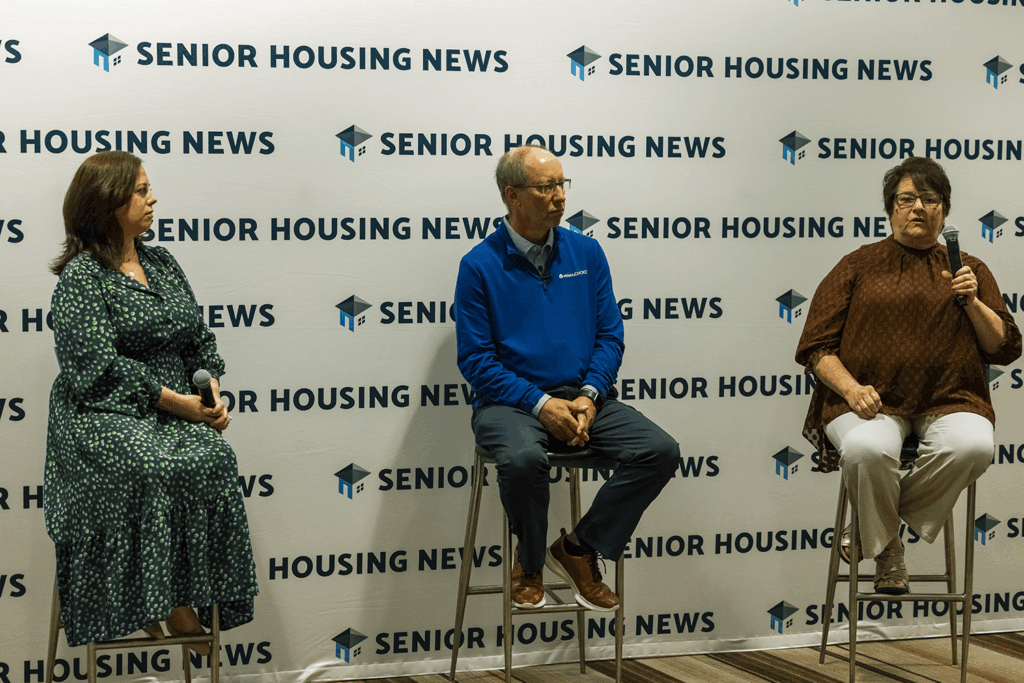
This article is sponsored by eMenuCHOICE. This article is based on a Senior Housing News discussion with Connie Gruno, VP of Dining Services at QSL Management Senior Living, Jenn Kent, Director of Project Management with Harmony Senior Services, and Jim Dukart, Account Executive with eMenuCHOICE. The discussion took place on September 3rd, 2025 during the SHN DISHED Conference. The article below has been edited for length and clarity.
Senior Housing News: We’re starting our next session: From Kitchen to Community — Aligning Culinary, Operations, and Technology for Memorable Experiences. I’m Austin Montgomery with Senior Housing News.
Thanks for joining me. To set the stage, I’ll start with Connie and Jenn. How is technology influencing your dining program — both from a resident and staff perspective?
Jenn Kent: For Harmony Senior Services, technology was integral in moving from paper-based processes to automation.
For residents, it creates efficiency in meal tracking, helps manage allergens and dietary needs, and improves billing accuracy. Families can also see meal records.
For staff, it streamlines dining operations. Younger team members are especially comfortable since they’re used to iPads and other tech. It makes their work more efficient, and you can see their excitement when they use the technology to interact with residents at the table.
That also brings more efficiency to the process. Jim, from your perspective, what trends are you seeing in senior living dining technology?
Jim Dukart: The biggest shift is from healthcare to hospitality. We often hear the phrase “restaurant-style dining,” but I’d argue we should just call it “restaurant dining.”
Senior living dining rooms are restaurants. Residents and guests come for meals, whether covered by a meal plan or paid directly.
I’m reminded of a colleague whose mother lived in a senior living community in Chicago. When we visited, she was always proud to take us to her dining room — it was the highlight of her day. The food was terrific, and the dining experience was central to her quality of life.
We sometimes underestimate how meaningful that is for residents.
Right. Let’s dig into resident choice and personalization. Jenn, you’ve spoken about “harmonizing” technology across Harmony communities. What does that mean?
Kent: Harmonizing means aligning elements to achieve common goals. For us, it’s about standardizing dining technology across all communities so residents have a consistent, high-quality experience — no matter which Harmony community they visit.
Jim, why do you think this transformation is happening now?
Dukart: COVID-19 was a big driver. Before 2020, most communities focused on communal dining. When that wasn’t possible, we had to pivot quickly — creating online ordering, tracking deliveries, and building systems that supported in-room dining.
Another driver is resident expectations. Years ago, many seniors didn’t use smartphones or tablets. Now, it’s second nature to order food digitally. That shift changes everything.
Absolutely. Connie, you’ve said dining should be “more than a meal.” How do you frame that for staff?
Connie Gruno: For years, we’ve emphasized person-centered care. Technology helps us deliver on that promise.
We know residents’ preferences and dietary challenges without needing to ask every time. That removes the clinical feel from meals and turns dining into a true restaurant experience — residents getting what they want, when they want it.
Dukart: I often hear residents say they love eMenuCHOICE because servers already know their needs. That’s how technology should work — invisible to the resident, but creating a smoother, more personal experience.
Jim, you’ve said many operators are still moving away from pen and paper. What pain points is technology solving?
Dukart: Lost tickets, illegible handwriting, billing errors, manual charge entry — all of those disappear with technology. With a few clicks, everything is accurate and recorded.
Jenn, you’ve used playbooks, FAQs, and even “test residents” to support Harmony’s rollout. What’s had the biggest impact?
Kent: Definitely the playbooks. They give dining directors step-by-step guidance and are interactive, so staff can click directly to what they need. Combined with videos and test resident accounts, this creates a safe, consistent training process.
Connie, how did QSL’s shift away from an older POS system play out?
Gruno: Our old POS system was fine at the time, but tech moves fast. When it failed, we often fell back on pen and paper. Now, with web-based tools, everything is accessible and no one gets shut down because one piece of equipment isn’t working.
How do you help staff get comfortable with new tools?
Gruno: The biggest early win was faster service. Residents weren’t asking “Where’s my food?” as often. That immediately reduced staff stress and built buy-in.
Jenn, tell us more about Harmony’s “train-the-trainer” model.
Kent: We rolled out technology to 44 communities. Regional leaders trained local directors using playbooks, videos, and test residents. Everything is housed on our intranet, so staff can access resources anytime. It’s sustainable and builds trust.
Jim, you’ve said, “If you can run an iPad, you can take an order.” Why is simplicity so critical?
Dukart: Ease of use makes or breaks implementation. The back-end setup is complex, but once live, it should feel simple for staff and residents alike.
We often hear that residents say the food “tastes better” or “comes faster” — not because the food changed, but because technology makes the process seamless. That perception matters.
Let’s touch on resident engagement. Connie, what’s worked well?
Gruno: With technology, staff can answer resident questions immediately — “Does this dish have tomatoes?” — instead of running to the kitchen. That helps sell daily features and improves satisfaction.
Kent: Personalization is key. We even use notes in the system — for example, one resident had been a Minnie Mouse at Disney World. Adding that detail gave servers a way to connect with her. Residents value that personal touch.
Jenn, what’s next for Harmony?
Kent: We’re piloting catering so families can host celebrations in residents’ communities — birthdays, gatherings, events. We also want to expand technology in memory care, turning mealtimes into events rather than tasks, and giving residents more choice and dignity.
eMenuCHOICE is the premier dining services management and point-of-sale application built for senior living. We make it easy for communities to enhance resident experiences, improve staff efficiency, and increase profitability. To learn more, visit: https://emenuchoice.com/.
Companies featured in this article: